When teasers and trailers for “Wuthering Heights” started appearing on screens in the fall of 2025, diametrically opposed reactions came with. These reactions ranged from intrigue over its sensually untamed aesthetic to completely refusing to watch it due to skepticism over book-accuracy.
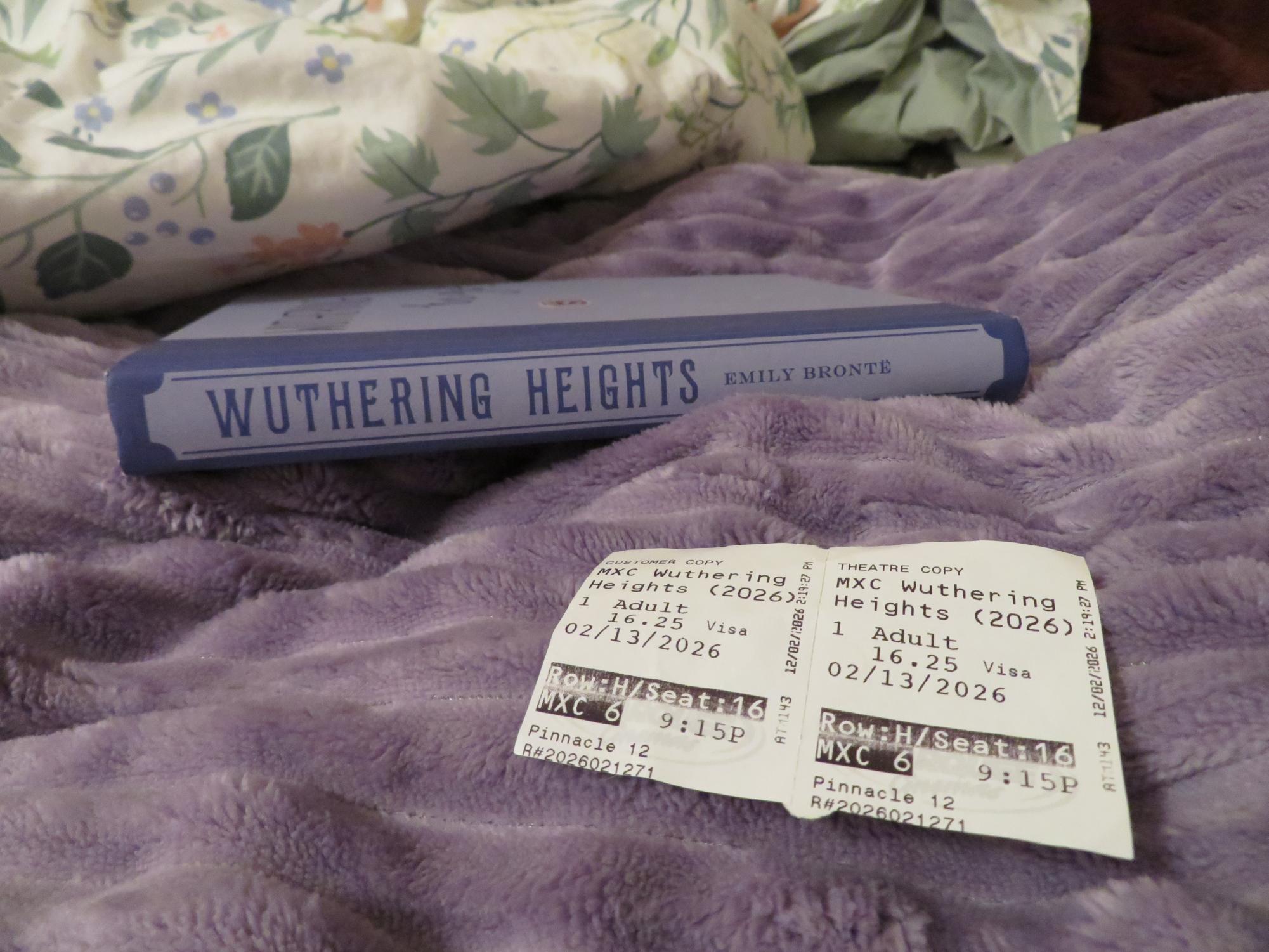
Divided over the multitudes of opinions seen online, I found myself in a cinema seat opening night. I watched, not leaving my seat once, and I loved it.
Emily Brontë’s raw, gothic fiction and her only published novel has haunted readers for generations. At the heart of Wuthering Heights’ appeal is its psychological depth. Through explorations of trauma, desire, and destructive behavior, Brontë invites readers to see the repercussions of all-consuming passion and cruelty in relationships. The novel offers intricate narrative structure and a look into its complex characters, revealing themes of social class, love, and obsession.
Characters like Heathcliff and Catherine Earnshaw pose to be challenging to capture. The novel is driven mostly by the cycles of revenge and the consequences, with social class distinctions and gothic elements. When people think of Wuthering Heights, they often label it as a “passionate love story.” I feel that it’s heavily misinterpreted, with destructive codependency and manipulation leading to tragedy.
Ultimately, the story is more about the capacity for inhumanity within humans. Told through multiple perspectives of narrators seemingly undependable, I feel that there’s a divide between the reader and the novel. This makes it difficult to understand at times; however, I believe that this is what allowed the director of “Wuthering Heights”, Emerald Fennell, to bring a provocative lens to the story in 2026.
It can be frustrating to read a novel, enjoy it, and then see a film adaptation that has even just small changes, let alone stray from the original altogether. Even watching the trailers for “Wuthering Heights” I was quick to judge saying, “That’s not what happens in the novel!” But as the movie played, I found that I was reminding myself it was a loose interpretation rather than an accurate adaptation. With this in mind, I was able to appreciate both the novel and the 2026 film.
In a world of media focused heavily on romanticizing the unrealistic, “Wuthering Heights” gives viewers something other than the usual sappy love stories that have happy endings. It feels refreshing to watch a film that allows heavy focus on toxic love, class conflict, and obsession to be displayed with modern flair.
As someone who’s grown to love visually stunning movies, I am deeply drawn to the intense aesthetics featuring the untamed Yorkshire moors, gothic corsetry, and the “alive” look of the architecture in the 2026 film. While “Wuthering Heights” focuses more on capturing the Brontë vibe rather than closely sticking to the novel, it allows viewers to interpret the story in other ways.
While watching, it’s easy to get caught up in the cinematography of the film. It’s moments like when the soundtrack features songs that bring viewers back to the modernity of the film. I’m not someone who typically listens to British singer-songwriter Charli XCX, but I found myself excited to see how her work would sound and play out in “Wuthering Heights.”
The 12-track soundtrack created by Charli XCX for the film is the last thing you could expect to be involved in anything that has to do with Emily Brontë; however, it does capture the raw emotions of the film by simultaneously mixing electronic sounds and romantic suspense.
Looking at this film, it serves as a reminder that stories can always be reinterpreted and changed throughout generations. While there are many mixed reactions to the 2026 film and other adaptations of “Wuthering Heights,” this only goes to show that stories can heavily impact audience view.