
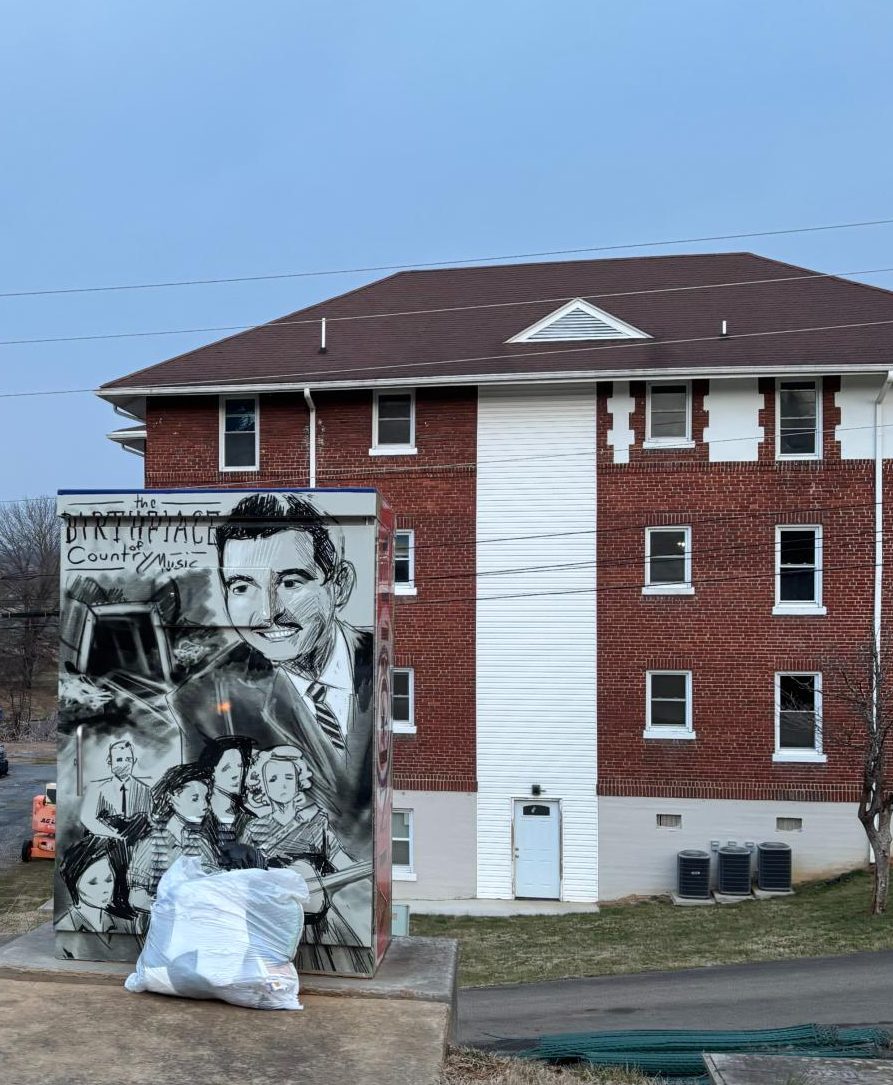
Country music has evolved to be one of the most definitive aspects of American culture. Its roots begin in the 1927 recordings at the Bristol Sessions in Bristol, Tenn. But before these recordings, in 1919, the most famous son of the city, Tennessee Ernie Ford, was born.
Those who may not know Ford’s name may know his rendition of “Sixteen Tons,” which is still listened to today.
Kris Truelsen, Radio Bristol Program Director and the host of programs such as Farm and Fun Time, has been an integral part of the modern landscape of country music in Bristol.
“I consciously play Ernie Ford on Radio Bristol and have performed his songs in a live setting as well,” Truelsen said. “His accomplishments in bringing country music to larger audiences are significant and deserve a platform still today.”
Through the broadcasting of Ford’s music, Truelsen represents him on a larger and more flexible scale. Without ties to a specific representative location, Radio Bristol offers a reminder of him across the region.
In general, the city of Bristol and the country music industry has been greatly influenced by Tennessee Ernie Ford and his representation of his hometown. Through his music, he has captured the soul and struggles of the Appalachian mountains while also pushing the popularity of country music to new reaches.
The Birthplace of Country Music Museum, or BCMM, while primarily focused on the 1927 sessions, has also been a contributing factor in preserving Ford’s legacy in the local community.
In its permanent collection, the museum has an arrangement of awards that Ford won in his career. These trophies of Ford’s success help serve as a reminder of him when looking at the history of music in Bristol.
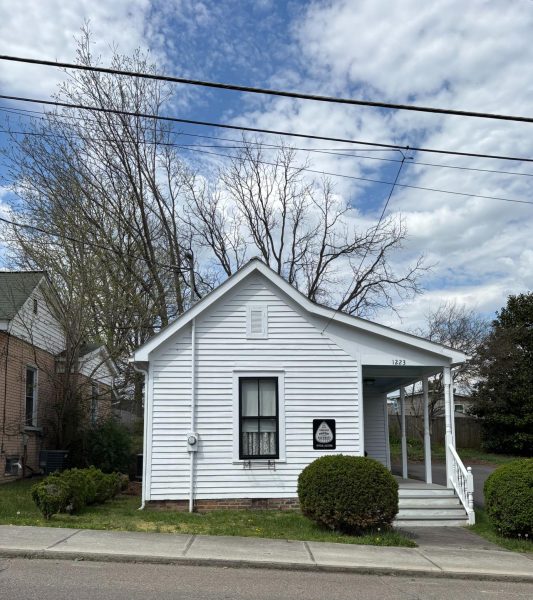
Another local reminder of Ford’s legacy is the house he grew up in, located on Anderson Street. In 1991, the Bristol Historical Association invested in his childhood home; this has now become one of the strongest reminders of him in the city.
Originally built in the early 1900s, the house has been restored to reflect its possible appearance at the time of Ford’s boyhood. While being a representation of his boyhood, it also tells the story of his career through a range of memorabilia.
Charlene Baker, the Associate Director of Believe in Bristol, acknowledges the strain of the small house and its location.
“Ernie’s boyhood home on Anderson Street is the most significant landmark [relating to Ford],” Baker said, “though the location can be challenging when it comes to parking for bus and group tours.”
Baker, through her roles in the community, has contributed to increasing awareness and involvement of Ford. Her belief in him as a staple of the community has helped foster this dedication.
“When I was Communications Manager at the Birthplace of Country Music, it was part of my job to get the media interested in Bristol and BCM’s mission of music,” Baker said. “Every media pitch I gave to entice journalists to write about Bristol included stories about Ernie.”
During his youth, Ford attended the Anderson Street Methodist Church, just blocks from his childhood home. It is said that he began his singing career through the church choir.
His interest in music was also very involved in his home. His father started a family-style quartet where Ford and his parents sang to his brother’s piano playing.
He would go on to attend Tennessee High School and play the trombone in the band. During his teenage years, Ford was employed at WOPI, a local radio station, as an announcer.
After high school, he pursued higher education that included classes at Virginia Intermont College on the Virginia side of the city. After his education, he continued his career in radio in 1939 when he moved to Atlanta.
After World War II, Ford moved back to Bristol and resumed his career at WOPI. However this return to his community was brief as he moved to California shortly after.
In San Bernardino, Ford worked at the radio station KFXM. It was this branch of his radio career that brought him recognition and laid the foundation for his fame.
It was in 1949 when he signed his first recording contract with Capitol Records. In 1955, he released “Sixteen Tons,” the song that would leave his mark on the world of country music.
At the peak of his fame, he returned to Bristol in 1961 to record an album with the choir of his childhood church. The album, named “Coming Home,” reflected his lasting commitment to his hometown and its people.
In the spring of 1991, Ford returned to the city for his final visit. Six months later, on Oct. 17, he passed away at the age of 72 in the city of Reston, Virginia.
Ford’s “Sixteen Tons”, while not originally written by him, has had profound impacts in multiple ways.
In a tie back to his community, the choice of Ford to initially sing the song was one that was rooted in a goal of taking a stand against the treatment of the original artist, Merle Travis. Travis’ role in the entertainment world was threatened by the coal business due to the song’s negative view upon the industry that had built much of Appalachia.
“In an act of defiance, Ernie chose to perform [the song] on [his] show, basically risking his own career to advocate for the mistreatment of a fellow friend and artist,” Baker said.
From the perspective of country music, his rendition of the song quickly gained popularity and opened up new chapters for the genre’s success.
“[The song] crossed over from country to pop, selling millions of copies and proving that country artists could achieve massive commercial success beyond traditional genre boundaries,” Truelsen said.
This intersection of genres has come to be one of the most impactful features of Ford’s legacy on the music world. His expansive success fostered this lasting influence.
“Ernie had universal appeal and was successful across several platforms – radio, television, and the recording industry,” Baker said. “He was also among the few artists with crossover appeal from country music to pop.”
His specific contributions to the stage of country music progressed the genre in style, as well. He laid the foundation for expansions and even subgenres with his great impact on Gospel music.
“In many ways, he served as a bridge between Bristol’s foundational 1927 recordings and the modern, nationally recognized country music industry,” Truelsen said.
Today, Bristol has come to honor Ford in many ways that pay respect to his impacts on the music industry and his relations to the region. While some of these means of representation are not as prevalent as those that reference other events, they reflect the respect and care that many local residents have towards the late country music icon.
“Tennessee Ernie Ford is an important part of Bristol’s identity, and there are many dedicated individuals and organizations who work tirelessly to preserve and celebrate his legacy,” Baker said. “At the same time, preserving history is never a finished task – it requires ongoing support and involvement from the community.”