

Whether it’s the smell of mouth-watering meat and cheese being blended together on a crispy corn husk or the distant sound of traditional mariachi music playing in the distance, Hispanic heritage is all around us.
From Sept. 15 to Oct. 15, National Hispanic Heritage Month recognizes Hispanic culture, history, and contributions to the United States. From festivals to parades and parties in regions as different as Arkansas and The Bronx, Americans commemorate the endless list of contributions Hispanic people have made to this country.
While it started with President Lyndon B. Johnson in 1968 as Hispanic Heritage Week, the proclamation of Hispanic Heritage Month did not come until President George H.W. Bush in 1989.
Many Hispanic families in the US take this special time to connect with their family through food.
“We’ll have a big fest with all of my family,” said senior Jose Vasquez.

Other families take this period to hold bigger celebrations honoring Hispanic cultures through businesses. Senior Emilio “Milo” Ochoa’s family is from El Salvador and Guatemala. His uncle owns Gio’s Candy Shop on State Street.
“My uncle just held a festival at his store and my whole family all went,” Ochoa said.
Although Hispanic heritage runs deep through these areas, some families aren’t aware of the time to celebrate their culture, such as sophomore Miguel Rodriguez and his family.
“I don’t think my family really knows about [Hispanic Heritage Month] or celebrates,” said Rodriguez.
Rodriguez’s perspective reflects how awareness of this month itself can vary, even within Hispanic families. He recognizes his family, the Spanish language, and traditional foods as important factors of his identity.
Hispanic Heritage Month is also a time to recognize the hard work millions of Hispanic Americans have contributed across this country for centuries. Cuban native Fabiana Maqueria has experienced this work ethic firsthand when she lived in a historic Hispanic city.
“Miami is a prime example; most of it has been built by Cubans and Hispanics, and they are a huge majority of the workforce in America,” said Maqueira.
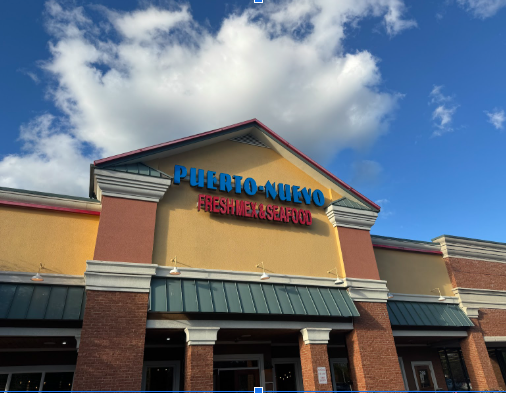
Rosa Lim, a native of the Dominican Republic native and the Spanish teacher at St. Anne’s Catholic School, believes being Hispanic is so much more than cultural differences.
“It’s beyond a language–it’s a way of life, a mentality,” said Lim. “I feel like a lot of my work ethic comes from who we are as Hispanics.”
For Lim, celebrating her cultural heritage means more than passing the language down to her own children or students, but also passing down the traditions.
In her classroom, she celebrates with her students by sharing cultural facts and music with them. She encourages them to learn about famous Hispanics, such as Juan Diego, the first Catholic saint who was indigenous to North America.
Spanish lineage has spanned the history of North America. From Christopher Columbus in the Caribbean to Spaniards in New Mexico to Mexicans in Texas, Hispanic influences are closely intertwined in the American story.
“Hispanic heritage has always been here,” said Spanish teacher Alex Greer.
Hispanic tradition is kept alive in this country by over 60 million Latinos, which is about 19% of the population and the largest minority in the United States, according to the Pew review.
These numbers are significant when analyzing the Hispanic influence on the diversity pool of American culture.
“I think there’s so much more diversity around the border, and Mexican traditions are a lot more common because of that,” said Miguel Rodiguez.
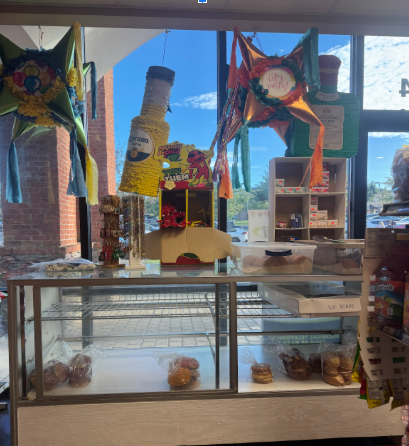
Additionally, Mexican food has helped build the Western food market with “TexMex,” a common category of food found in the Southwest. Traditional Hispanic food is finding its way into rural areas of the country that used to be associated with Latino communities.
For example, pupusas, which originated in El Salvador, are a popular Hispanic dish in which savory ingredients are stuffed inside a fluffy handmade corn or flatbread.
“Me and my mom make pupusas all the time,” said Ochoa, whose mom is from El Salvador.
More evident to Hispanic influences on American culture is the countless list of influential Hispanic Americans who have helped shape the history of America for generations.
“There are so many influential Hispanics, like important activists, actors, musicians, astronauts, Olympic medalists, and writers,” said Lim.
Singer Bruno Mars, actress Jenna Ortega, activist Cesar Chavez, and baseball legend Joe DiMaggio are just a few off a list of thousands of significant Hispanics who have impacted American culture and history.
Despite these rich contributions, however, many Hispanics now face a new onset of problems amid high political tensions. As of September, over 400,000 people have been deported by U.S immigration and customs officials (ICE), according to Homeland Security.
While not all of these individuals were Hispanic, concerns of being targeted or deported have increased in Latino communities.
“People just assume, oh, they’re immigrants, then they don’t belong here,” Ochoa said. “But a lot of these immigrants come here to escape.”
Negative attitudes towards Hispanics are often fueled by news stories that sensationalize crime associated with Mexican immigrants.
“The biggest issue facing Hispanics is how [some people] believe Mexicans act,” said Vasquez. “The world thinks that we’re like criminals and threatening.”
Although these concerns are alarming to the Hispanic community, Hispanic Heritage Month stands as a reminder that celebration and recognition go hand in hand.
Whether it’s through food, music, or stories of loved ones, this month is a chance for our community to honor a culture that continues to shape America and call to action injustices still endured by millions of people today.
“You know everyone has their superpower, and mine so happens to be my language,” said Lim. “I always tell [my students] we are more than just tacos and burritos. We are music, we are so much culture, so much tradition.”









![Lucy Millwood [left] and Sophia Streetman [right] with water guns in hand, getting prepared to eliminate their target(s).](https://thsmaroonandwhite.org/wp-content/uploads/2026/05/senior-a.jpg)




Bryant Rife | Oct 10, 2025 at 11:30 AM
Great article, Noah. Good Work!