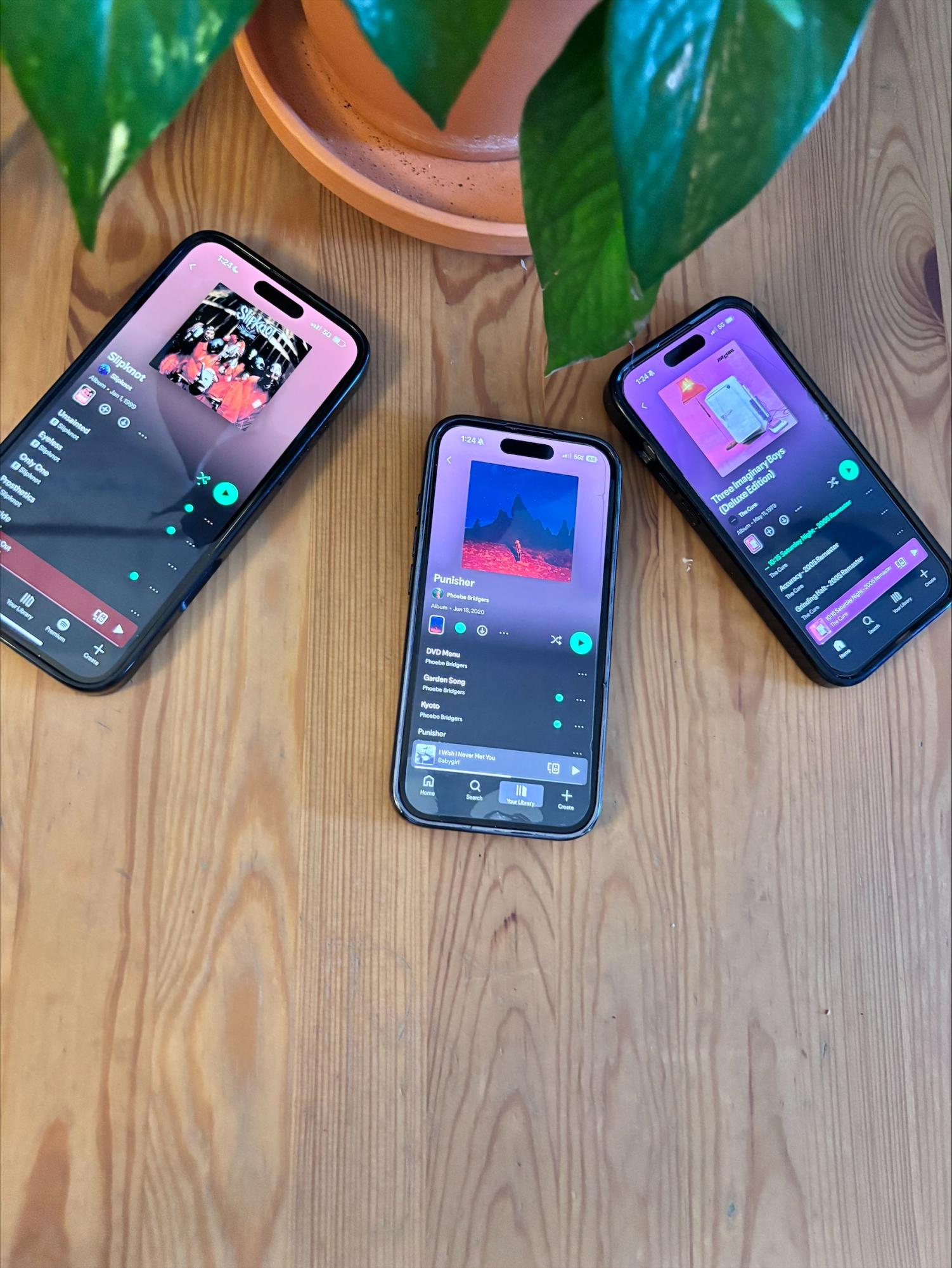
How do you listen to your music? Do you enjoy the portability of digital media, such as having everything available on your phone through a subscription service? Or do you enjoy sitting beside a record player, listening to the needle scratch over the vinyl, or popping in an old CD on a long drive?
Physical media for music has made a comeback, with vinyl and record players seeing increased sales. More people claim they still use the CD player in their car because CDs are easier to use. Culturally, however, we are embracing terms like ‘throwback’, ‘retro’, and ‘vintage’. What does that mean to our younger generation? A person in their 50s definitely remembers when music was solely on vinyl, then transitioned to CDs. Gen Z is calling back the 50-somethings’ childhood classics in thrilling revival styles.
“I like vinyls better just because of the nostalgia I get from it, and it just feels more authentic to me,” Junior Kailey Caudle said.
Many people like Kailey agree that vinyls have a special aesthetic to them, and just being able to listen to music on a physical piece means something to them. Although physical music is loved for the nostalgia and the ability to listen to a physical piece, giving a warm feeling, owning physical music can be a real struggle, especially when we live in a time when digital music dominates.
“A lot of people would have to go back and buy the physical tech needed to access what’s recorded on the physical music,” Biology teacher Harold Kelley said. ”A lot of people these days don’t have CD players, and the vast majority of cars don’t have CD players in their vehicles, so they have to buy one to play a CD.”
Having a method of making music portable has been challenging for many years. Whether it be having to bring tons of CDs into your car, or paying money for a subscription, just to listen to that perfect song. Whether it be on a phone or a physical piece, the portability of music can be challenging either way.
Once cars began to offer CD players, driving took on a much more pleasurable experience. Car manufacturers eventually stopped including CD players with the radio, however, and digital offerings tied to the cell phone took over. Gone are the days when drivers had to fumble through CD cases while driving to get that perfect song!
Physical music does come with some downsides, such as the stress of finding where to buy it, the risk of it being damaged, and its lack of portability. While items like CDs and vinyl records can be expensive, they also provide some unique benefits.
“With the amount of reliance on technology and the amount of money and energy we spend on it, given how widespread music is, I think physical media would be a better way to not pour more expenses into modern technology,” sophomore Elaina Griffits said.“Although it’s expensive at times, it can be more accessible than a phone or a Spotify subscription.”
On average, people spend up to $25-40 per vinyl and $10-20 per CD. Collectors spend as much as $400 a year building their collection. Although we pour tons of money into Physical music, many people, such as Griffits, agree that we rely on technology too much to the point where physical music has the upper hand on not always having to rely on technology for things such as music, even though it seems to be the norm these days. Having a physical way to play music eliminates the need for digital storage or subscription costs, WiFi, or cellular access. A CD or record is always ready to play.
After the turn of the century and the decline in CD player sales from 2001 to 2004, or when Bluetooth became more available, the market saw an increase in digital media and streaming services. Music of all types came directly to a cell phone. A playlist was easily sent directly to one’s car, home speakers, computer, or even more throughout the use of Bluetooth technology.

We can now access thousands of titles instantly using a quick search feature. People are sharing playlists and modifying them as desired. The amount of music one person can possess is endless and takes up virtually no shelf space.
Although many people have different opinions about whether physical or digital music is better, we can all agree that there are numerous negatives and positives to both, and they both have provided many paths for the way we enjoy music.

![Lucy Millwood [left] and Sophia Streetman [right] with water guns in hand, getting prepared to eliminate their target(s).](https://thsmaroonandwhite.org/wp-content/uploads/2026/05/senior-a.jpg)